
Public transportation in Mexico faces constant challenges in terms of service quality, especially in regions with extreme climates where travel conditions directly impact the health of users.
Aline Ruz has 19 years of experience in print and digital media, and over a decade of specialization in covering public institutions and social programs in Mexico, including the Federal Electricity Commission (CFE), Welfare Programs, the Mexican Social Security Institute (IMSS), the Institute for Social Security and Services for State Workers (ISSSTE), the Ministry of Welfare, Pemex, the Tax Administration Service (SAT), the Federal Consumer Protection Agency (Profeco), and the Ministry of Public Education (SEP), as well as legislation such as the IMSS Law 73 and Law 97, the 2007 ISSSTE Law, and the Federal Labor Law, among others. Her career includes high-profile coverage, such as the Sarah Brightman concert at Chichen Itza (2009) and the 2012 and 2024 Mexican federal elections, demonstrating a deep understanding of politics, public administration, and social programs gained through field experience. A graduate in Social Communication from the Faculty of Anthropology at UADY, Aline has been recognized for her rigor and credibility, cited by media outlets specializing in social welfare and social security issues, solidifying her authority in the journalistic and legal fields. Her commitment to truthful and reliable information is reflected in her ongoing work, providing expert analysis and trustworthy coverage of the functioning of institutions and laws that impact millions of Mexicans.
In the state of Sonora, where temperatures can easily exceed 40 degrees Celsius during the hot season, the use of air conditioning systems in public transportation becomes a necessity rather than a luxury. High temperatures not only affect passenger comfort but can also pose health risks, especially on long journeys.
Authorities have reinforced measures to ensure that public transportation vehicles meet adequate conditions during the hottest months. In Sonora, where extreme heat is a constant, specific guidelines have been established to guarantee that users have access to a more dignified service.
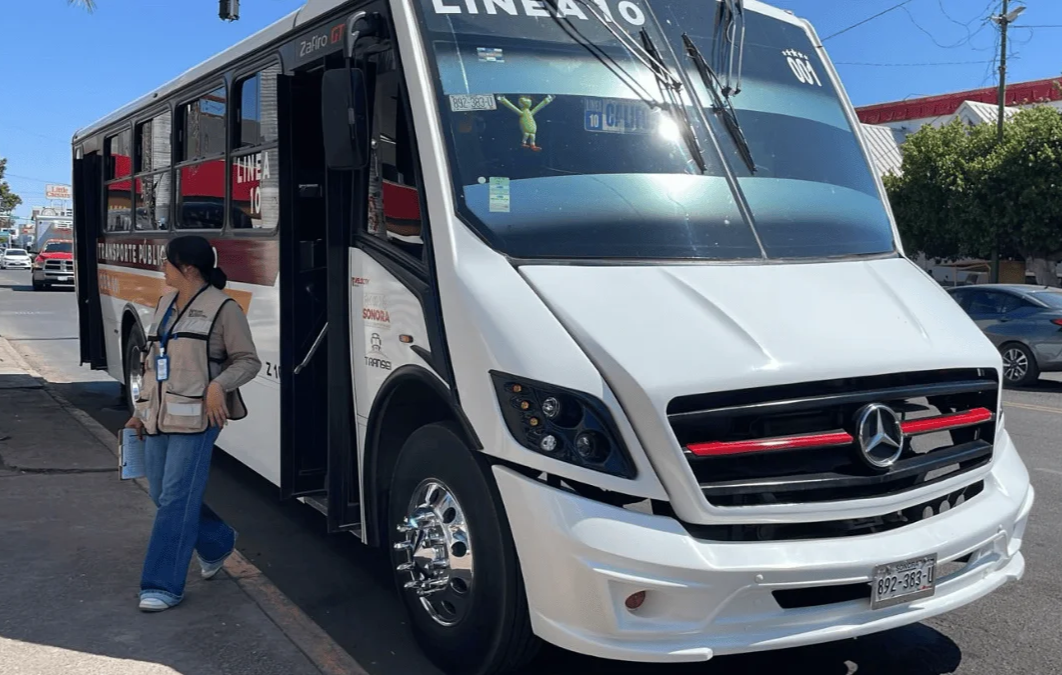
Starting April 15, the use of air conditioning in city buses is mandatory, and non-compliance will have financial consequences. For the first few days, authorities will issue warnings to non-compliant buses; however, starting the following week, fines will be imposed.
How much are the fines? Penalties for those who do not turn on the air conditioning start at 30 UMAs (Units of Measurement and Update) per bus, which is equivalent to more than 3,000 Mexican pesos, depending on the current UMA value.
This measure will be in effect throughout the hot season, from April 15 to October 15, a period when temperatures reach their highest levels in the state.
The head of IMTES (Institute of Transportation and Infrastructure for State Buses), Carlos Sosa Castañeda, explained that the intention is to guarantee quality service, and therefore, concession holders were notified beforehand to carry out the necessary maintenance on their buses.
Currently, it is estimated that around 550 buses are equipped to operate with air conditioning, out of a total of approximately 780 units in circulation in the state, with Hermosillo having the largest number of vehicles.
The inspections will be carried out by the Institute’s oversight personnel, in coordination with regional offices, with the aim of verifying compliance with the regulations and penalizing those who do not comply.
In this way, the stricter measures in Sonora seek to improve the experience of public transportation users, especially during a season when the heat can become a critical factor for the health and well-being of the population.
Source: mibolsillo